
National Aerospace Week offers an opportunity to recognize the people, technologies and industrial capacity that sustain American aerospace leadership and contribute to allied security worldwide. For Spectra Defense Technologies, it also coincides with an important milestone: It’s been one year since the company introduced its unified global brand and shared the progress of its comprehensive organizational transformation.
The unified Spectra brand gave that transformation a clear identity in the market. It connected specialized teams and decades of experience under one global organization while giving customers and partners a more complete view of the company’s capabilities.
The rebrand was an important signal of where Spectra was headed, but it wasn’t the beginning of its next chapter. The company spent two years aligning systems, engineering, program management and operations. Today, Spectra operates as a unified global enterprise, connecting expertise across teams and technology areas to deliver integrated solutions that help customers maintain an information advantage across a rapidly evolving battlespace.
“Our unified structure allows us to collaborate more effectively by bringing together expertise from across the enterprise and delivering next-generation solutions that address the complete mission need.”
—Ray Munoz, CEO
“The launch of the new Spectra brand was an important milestone for the company,” said CEO Ray Munoz. “It showcased our unified structure, the innovative culture of the company and the value it creates for our customers and partners. By connecting our people, technologies and capabilities, we are delivering the complete solutions our customers need across programs and regions.”
Momentum driven by the mission
The value of that structure has become increasingly clear over the past year. Today, U.S. and allied platforms generate and consume more data than ever. To stay ahead of near-peer threats, aircraft, ground vehicles, maritime vessels, space systems and autonomous platforms must capture, secure, store, process and display information in real time, often within strict size, weight and power constraints.
Meeting that need requires more than a collection of individual components. It calls for technologies developed with the broader mission architecture in mind and partners that understand how those capabilities must perform together in the field.
In December, Spectra announced its selection to deliver rugged mission computing and data management systems for a critical next-generation ground vehicle modernization program. The company is also advancing its support of the National Advanced Surface-to-Air Missile System through a multimillion-dollar production award from Kongsberg Defence & Aerospace.
These programs demonstrate where the market is moving. Defense customers increasingly need open, interoperable systems that can meet current requirements while adapting as the software, sensors and mission priorities evolve.
“Today, customers aren’t looking for individual capabilities that operate in stovepipes,” Munoz said. “They need partners who understand how technologies work together at the system level and who can help reduce complexity, protect existing platform investments and create a practical path to modernization.”
Innovation across the technology stack
Growing customer demand has also shaped Spectra’s product strategy.
The company launched the G2 Ultra Rugged microNAS to capture and securely store multiple high-bandwidth sensor streams on space-constrained platforms, with multilayer full-disk encryption options that protect mission data at rest. It also introduced a family of rugged 4K displays that allows operators to view mission data, tactical information and multiple sensor feeds through a single high-resolution interface.
In June, Spectra launched XSR Spire, a compact, IP67-rated mission computer designed to move high-performance processing closer to the tactical edge. Its open, modular architecture allows customers to easily add interfaces and capabilities without redesigning an entire platform.
Together, these next-generation solutions demonstrate how Spectra’s new unified structure translates specialized expertise into complementary capabilities that support the flow of mission data and information from capture and secure storage to edge processing and visualization.
For customers and industry partners, that portfolio can simplify integration, reduce the burden of coordinating multiple suppliers and create a more sustainable path for adding capabilities over time. For end users, the value is measured in enhanced access to mission data, faster decision-making and systems built to reliably perform in some of the world’s most challenging environments.
Innovation isn’t limited to hardware. Spectra’s team recently developed a working implementation showing how the NATO Generic Vehicle Architecture data model can operate with OpenDDS. The effort provides a practical reference for improving interoperability among subsystems from multiple suppliers on military land vehicles.
“Our best ideas often begin with an engineer listening closely to a customer’s operational challenges,” Munoz said. “Our unified structure allows us to collaborate more effectively by bringing together expertise from across the enterprise and delivering next-generation solutions that address the complete mission need.”
Investing in global capacity
Growing global demand for Spectra’s capabilities is driving continued investment in the people, facilities and operations that support responsive engineering, production and customer support in U.S. and allied markets.
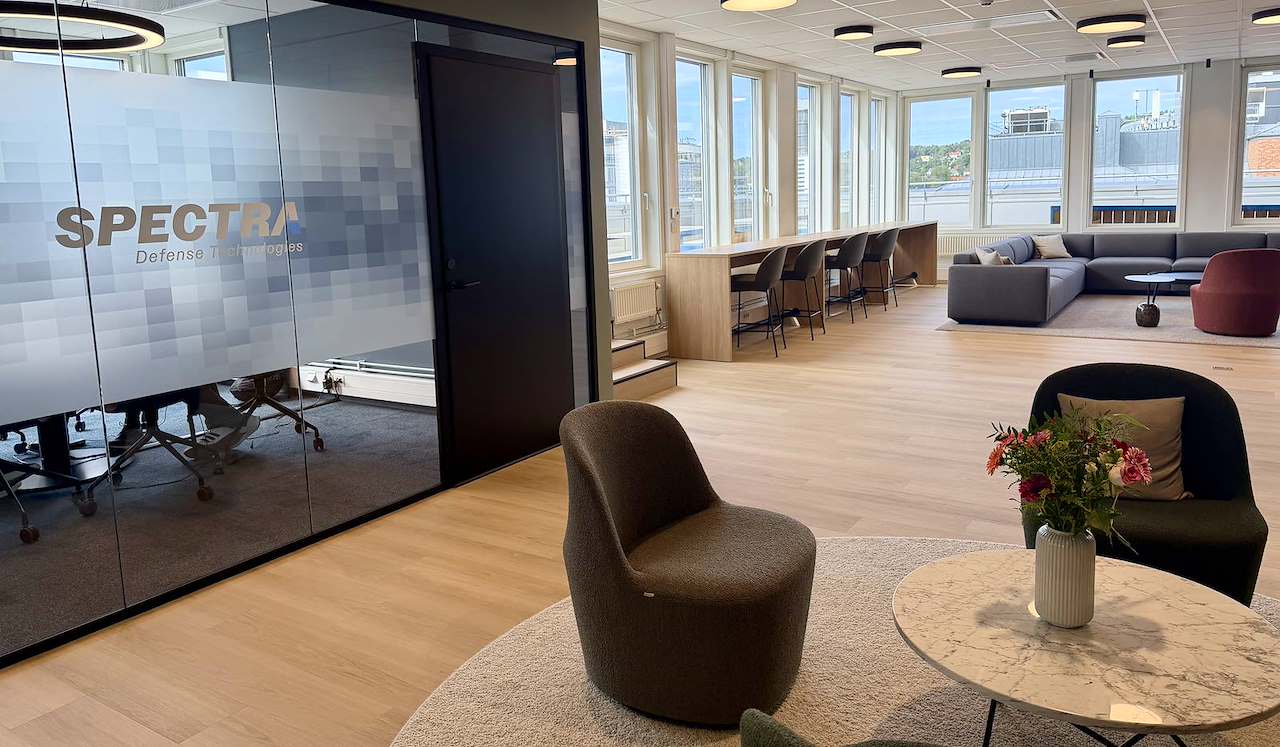
In August, the company opened a new facility in Oslo’s Skøyen innovation district, more than doubling the location’s engineering and manufacturing capacity. The approximately 25,000-square-foot facility expands production, research and development, testing and systems integration for European and allied customers.
The investment reflects Spectra’s broader operating model. The company combines sovereign capabilities, regional expertise and customer proximity with the portfolio, resources and program experience of its unified global enterprise.
That model also supports speed. When a longtime customer needed a replacement for a mission-critical system approaching the end of support, Spectra designed and delivered a customized rugged data recording solution in approximately six months while maintaining compatibility with the customer’s existing infrastructure.
Spectra’s ability to build what comes next is grounded in over three decades of experience delivering trusted, battle-tested solutions and the differentiated expertise of its people across the company.
Building what comes next
For U.S. defense leaders, allies and global industry partners, Spectra’s progress illustrates the importance of a resilient global defense industrial base that can innovate quickly, integrate across complex architectures and support systems over long operational lifecycles.
“The Spectra brand represents more than a shared name,” Munoz said. “It reflects the culture of innovation and unified organizational structure behind our ability to support all-domain modernization priorities as one global enterprise. By bringing together our people, expertise and capabilities, we’re responding to evolving mission needs faster and delivering the next-generation solutions needed to continue giving our men and women in uniform the information advantage they need. This one-year milestone reflects how far we have come as One Spectra. Stay tuned, because we are just getting started.”
As the nation marks National Aerospace Week, Spectra is honored to recognize the employees, customers and industry partners strengthening the aerospace and defense industrial base.