
The implementation of Combined Joint All-Domain Command and Control (CJADC2) is fundamentally reshaping how the U.S. military and its allies approach the tactical edge. Rather than treating individual aircraft, vehicles, unmanned systems and vessels as isolated platforms, modern defense strategy views them as critical nodes within a unified, global data network.
It’s a shift that extends across other major U.S. and global allied modernization initiatives, from the Pentagon’s focus on the Mission Partner Environment (MPE) to NATO’s Next Generation Targeting (NGT) project and Federated Mission Networking (FMN) framework. Driven by these coordinated efforts across the Department of War and international partners, conventional and autonomous systems are deploying an unprecedented array of sophisticated sensors to capture a clearer picture of the multi-domain battlefield.
This influx of real-time intelligence is vital for enhancing mission effectiveness and shortening sensor-to-shooter timelines. But it also creates a compelling engineering challenge to ingest, secure, and process high-bandwidth data streams within the rigid space, power and cooling limits of existing and emerging U.S. and allied systems.
Expanded portfolio
As defense organizations around the world continue to embrace network-centric operations, Spectra Defense Technologies is expanding its portfolio of rugged computing, secure data storage and advanced visualization solutions. This approach is also designed to help U.S., NATO and coalition forces worldwide maintain an information advantage by delivering the capabilities needed to bridge the gap between legacy platform constraints and next-generation connectivity requirements. By streamlining how data is protected and operationalized at the edge, these solutions ensure that frontline nodes can seamlessly integrate with broader networks while also giving operators an immediate information advantage.
“Modernization isn’t simply about adding more technology to a platform,” said Cory Grosklags, Chief Commercial Officer of Spectra Defense Technologies. “It starts with understanding the customer’s operational challenge, then delivering new capabilities that will enhance mission effectiveness and easily integrate with existing platforms without creating new burdens for the people who field, operate and sustain the system.”
Over the past six months, Spectra has introduced a series of rugged computing, secure data storage and advanced visualization systems designed to align with modernization efforts and solve baseline integration challenges. This accelerated product momentum reflects an innovative culture built on decades of mission-proven performance, close customer engagement and a unique understanding of how mission needs evolve over time.
It also highlights the benefits of Spectra’s transformation into a more unified global enterprise. By fostering deeper internal collaboration and connecting specialized expertise across regions and technology domains, the company has further enhanced its ability to deliver more agile solution sets tailored to today’s rapidly evolving military operations.
Responsiveness at scale
Across its global operations today, Spectra combines the scale and resources of a unified enterprise with the responsiveness and technical insight of teams closest to the customers and missions they support. This model allows the company to address shared modernization priorities while tailoring solutions to the unique operational needs of each customer.
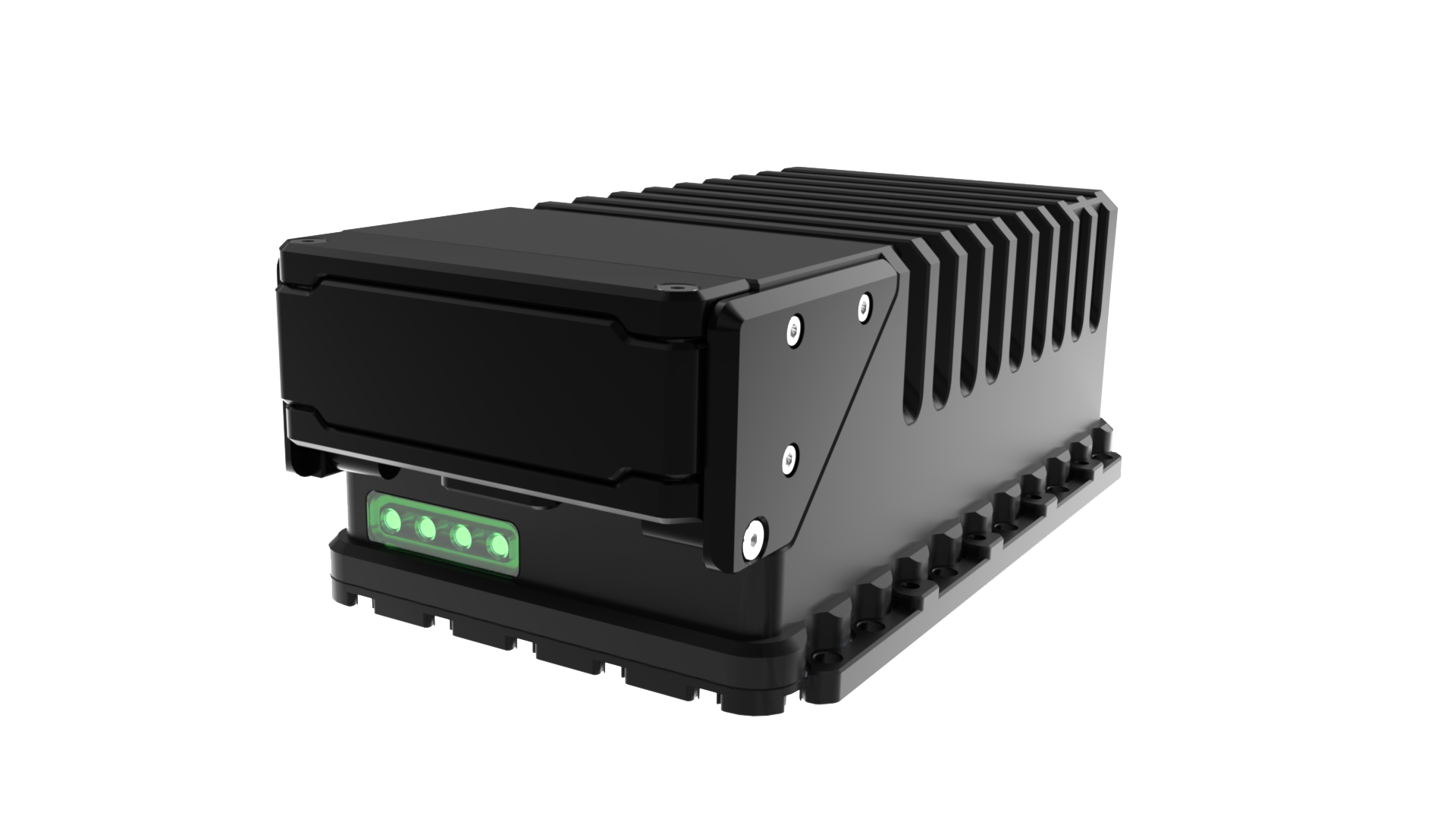
That combination of enterprise-wide collaboration and specialized expertise is reflected in the company’s new G2 Ultra Rugged microNAS, a compact network-attached storage system developed for platforms carrying multiple high-bandwidth sensors. The system integrates four 10-Gigabit Ethernet connections and supports removable NVMe storage modules of up to 16 terabytes, allowing it to ingest multiple sensor streams without external switching equipment.
For prime contractors and systems integrators, this architecture eliminates integration complexity, drives down size, weight and power (SWaP) demands. It also drastically cuts data offload times between critical missions. The design reflects a central reality of modern defense acquisition where most programs are upgrading proven, legacy platforms that must remain fully operational even as they incorporate faster networks and more sophisticated mission systems.
Processing at the tactical edge
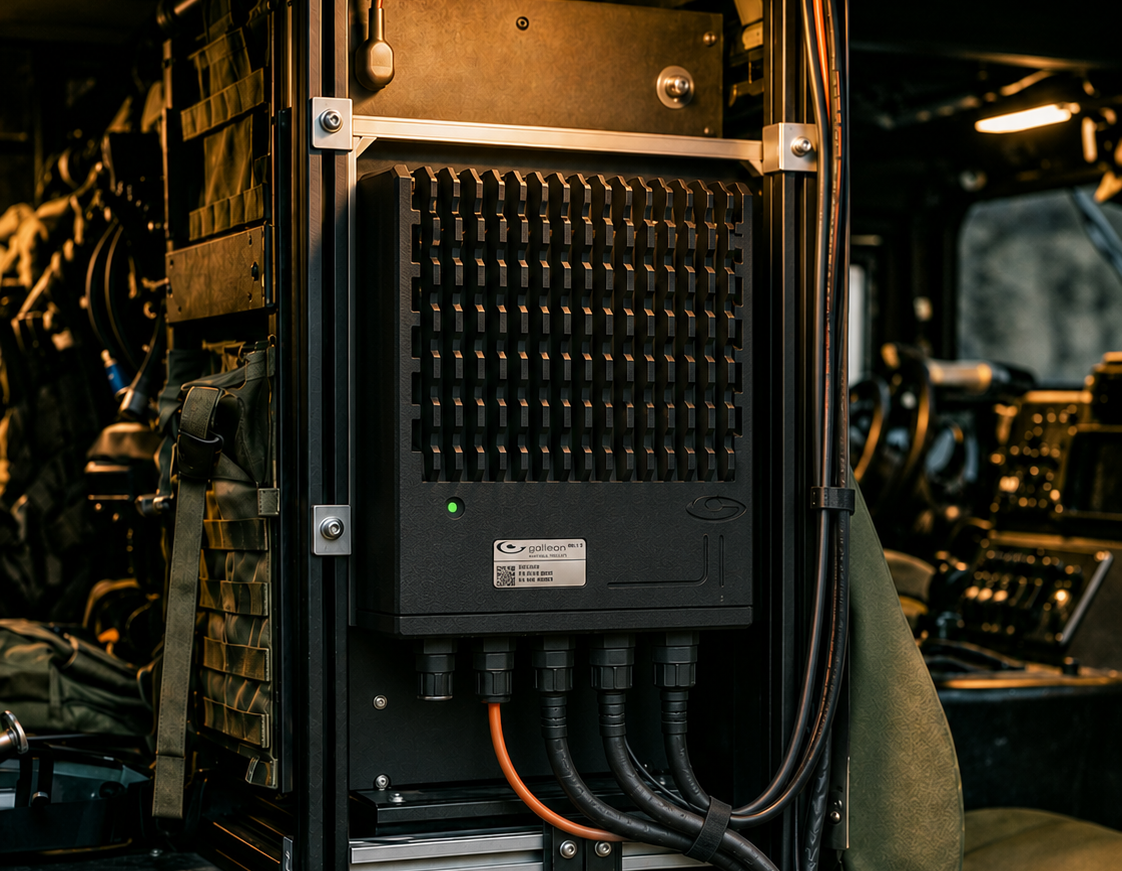
Yet capturing information is only half the battle. Military forces must also process data closer to the tactical edge as operations become more distributed and decision timelines shrink. To address this reality, Spectra recently introduced the XSR Spire mission computer. The compact, IP67-rated system combines high-performance processing with open-standard interfaces and modular expansion options tailored for space-constrained ground vehicles, aircraft, maritime vessels, unmanned systems and sensor payloads.
Moving computing power directly to the sensor payload supports faster decisions and maintains mission resilience when long-range connectivity is limited, denied or contested. The Spire’s modular design also provides teams the flexibility to introduce new interfaces and software patches without forcing a costly, time-consuming redesign of a platform’s entire architecture.
The XSR Spire builds on a deep foundation from Spectra’s team in Oslo, Norway, where engineers have spent decades ruggedizing sovereign computing technology for demanding NATO and allied applications. That local expertise remains a vital asset for European customers and allied forces worldwide seeking responsive, regional support and access to critical sovereign and in-region capabilities.
“Our transformation is helping teams work together more effectively while preserving the regional expertise, sovereign capabilities and customer proximity that made them successful,” Grosklags said. “That balance allows us to bring the strength of a broader enterprise to customers without losing the in-region capabilities and technical depth they trust and the performance they rely on every day.”
High-resolution displays
The same focus on practical modernization drives Spectra’s rugged display portfolio. Its recently introduced 24-, 27- and 32-inch Rugged 4K Displays present multiple sensor feeds, tactical overlays and mission data through a single high-resolution interface. These displays use both digital and legacy analog connections to bridge old and new platforms.
Spectra is also making its ARD21, a proven 21.3-inch rugged display, available to the U.S. naval market. With more than 3,500 displays fielded to date, the ARD21 brings an established performance record to shipboard visualization modernization.
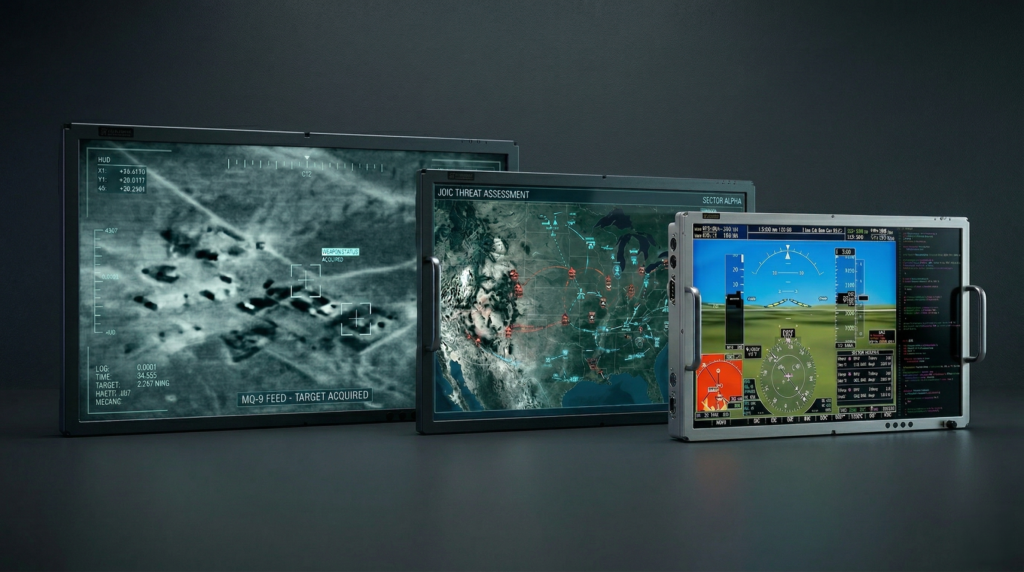
Its form-fit-function compatibility for existing legacy 20.1-inch display installations allows naval programs and industry partners to easily integrate the ARD21 without requiring extensive changes to the platform infrastructure. This can significantly reduce integration, certification and schedule risk while protecting investments in proven systems.
The ARD21’s compact, fanless design supports integration into space-constrained naval workstations while reducing cooling and maintenance demands. Long-term availability also gives programs a more predictable path for phased modernization and managing obsolescence.
Designed and built at Spectra’s headquarters in Alpharetta, Georgia, the ARD21 draws on more than three decades of rugged display experience. Its latest expansion to the U.S. Naval market extends that proven expertise to programs seeking a practical, supportable path for modernizing shipboard visualization systems.
A complete mission stack
Looked at as a whole, the G2, XSR Spire and Rugged Display lines demonstrate Spectra’s momentum across the mission technology stack. These combined systems deliver a measurable boost to mission effectiveness by empowering platforms to capture massive data loads, secure critical intelligence at rest and process high-bandwidth streams directly at the tactical edge.
“The solutions we have introduced over the past six months are not only contributing to momentum at Spectra, but more importantly, they are enabling defense organizations worldwide to meet modernization objectives and maintain an information advantage across today’s data-driven battlespace,” Grosklags said. “Our customers rely on the proven performance of Spectra systems every day. We are building on that deep trust by giving operators the next-generation solutions and adaptable technology needed to deter near-peer threats for decades to come.”
That is where innovation becomes operational advantage, and where product momentum becomes mission impact.