
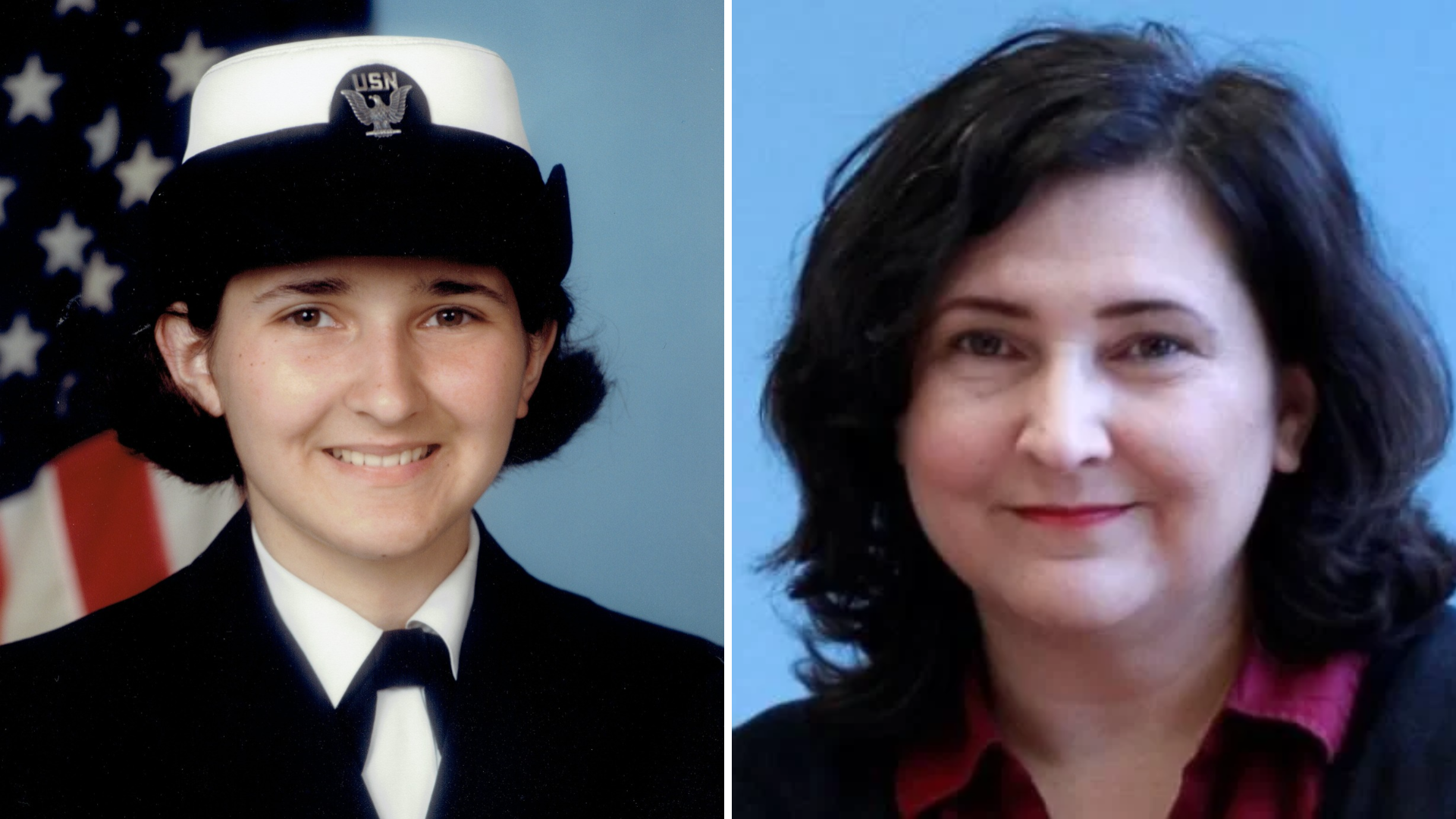
On Nov. 11, Spectra Defense Technologies marks Veterans Day 2026 under the banner “One Spectra. United in Service.” Ray Munoz, CEO and a Navy veteran himself, said this year’s focus is on honoring the veterans within the company.
“These are people we work alongside every day, each with their own stories and experiences, who continue to bring so much to our team,” he said.
One of those colleagues is Kristine Jones, a supply chain specialist at Spectra based in Alpharetta, Georgia. Kristine served in the U.S. Navy from 1986 to 1994 as a Russian interpreter. She shared how her service shaped her work, what she wishes engineers knew about the gear in the field and how colleagues can support the veterans around them.
From the Navy to defense
What was your role in the Navy?
I served in the U.S. Navy from 1986 to 1994 as a Russian interpreter.
How did you end up in the defense industry?
It found me. I was in a networking group with a former HR director when FDS Avionics was looking for a project coordinator. She recommended that I apply. (The company later became part of Spectra.)
What was the shift from military to civilian work like?
My first job after the military was as a Russian-language customer service representative at MCI. Out of a 50-person team, I was one of only two non-native speakers. Using Russian full time, eight hours a day, five days a week, gave me more daily practice than I had as a consecutive interpreter in the service.
The mission and the stakes
When you were in uniform, what did you wish the people building your equipment understood?
If I could have told the engineers behind our gear one thing, it would be this: every mechanical or electronic failure carries a cost far beyond the hardware. It directly affects the success and safety of the mission.
What does it mean to be on the other side now?
I am dedicated to supporting our production staff and making sure service members receive dependable, high-quality equipment.
How do you think about the responsibility that comes with supporting defense technology?
We are responsible for safeguarding national security through uncompromised quality assurance and resilient supply chain management.
Lessons that carried over
Which lessons from your service show up in your work most often?
Every day I draw on the rapid data analysis, attention to detail, nuanced thinking and composure under pressure that I honed as an interpreter.
Is there a habit from service that you bring to every project?
Pattern recognition and predictive processing. Both are essential to learning a language, and both now drive my success in this role.
Does having served change how you talk to customers?
Less than my background as an interpreter does. Being attuned to the nuances of language is what truly guides how I communicate.
Veterans Day and the workplace
What does Veterans Day mean to you?
It’s a meaningful day to recognize every veteran. I deeply appreciate hearing firsthand accounts of their service.
What would you say to a veteran considering a career in the defense industry?
Moving from active duty to a military support role is a natural, rewarding step. Our background gives us a unique understanding of what current service members need. By sharing that insight, we can make life easier for the next generation.
How can colleagues and companies support veterans beyond a thank-you on Nov. 11?
A voluntary Military Service Wall of Honor in the office, recognizing the veterans and active-duty members on our team. It’s a simple, high-impact way to show appreciation for their service and humanize their background.
Is there an experience from your service you’d like to honor?
Few experiences matched the reward of working in nuclear disarmament treaty verification. I stood at the threshold of history, with a front-row seat to the dismantling of the Soviet Union. I watched an entire geopolitical era draw to a close while working to make the world a safer place.