
Key takeaways
- Spectra Defense Technologies’ new Skøyen facility in Oslo spans about 25,000 sq ft (2,300 m²).
- The move was driven by space, not a missing capability. The previous site could not accommodate more engineers, production workbenches, final test stations or a logistics setup that scales.
- The team has grown from about 40 to nearly 60 people.
- The site supports a strong European presence and the growing need for resilient European supply chains.
Since Erlend Møyland became CEO of Spectra Defense Technologies Norway, the team he leads has grown from about 40 people to nearly 60.
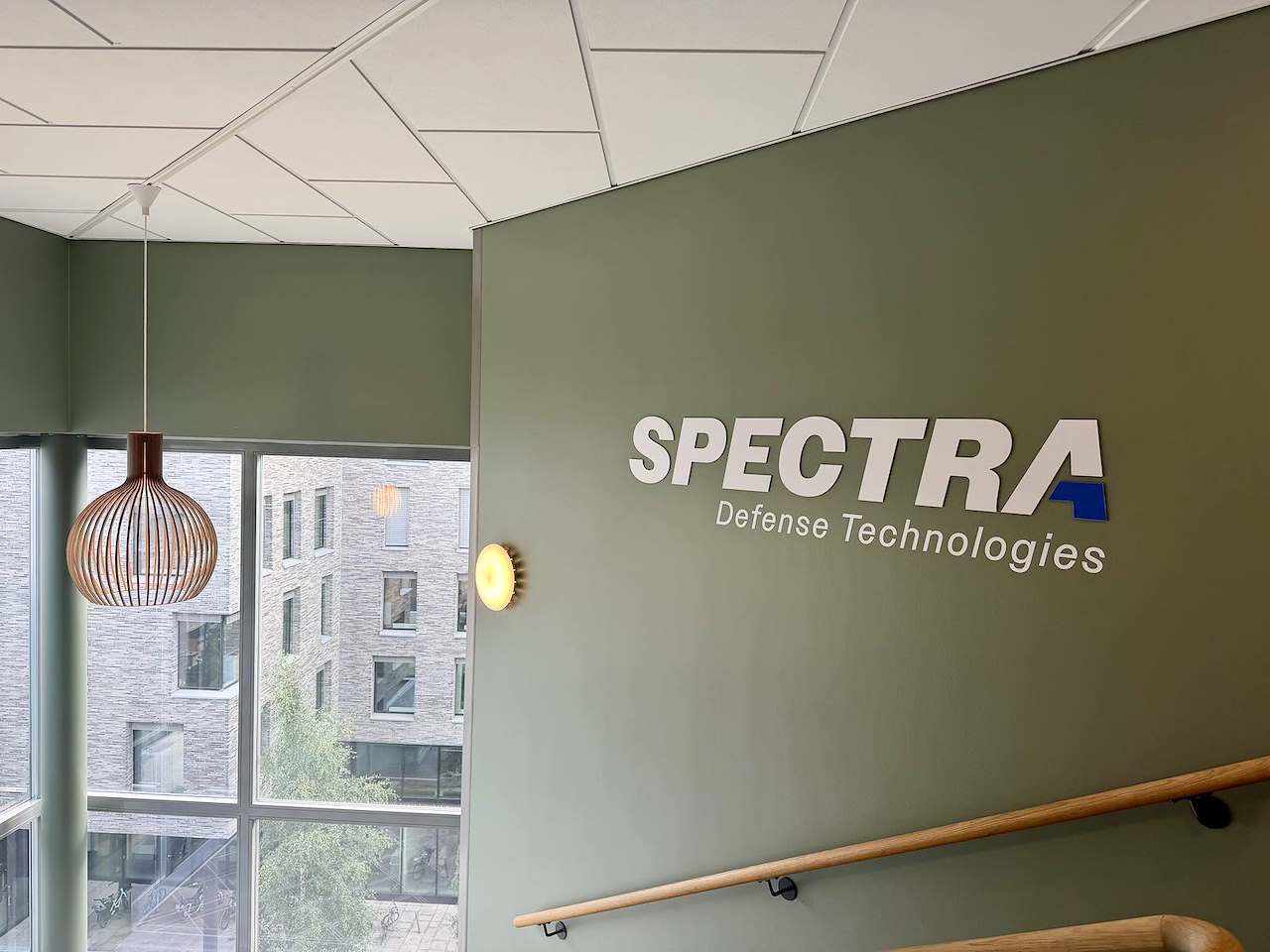
Spectra Defense Technologies Norway opened its new Skøyen facility in August. Here’s a look at the reasons behind it: what the team needed, what the new site makes possible and what is still being decided.
What growth required
The driver was space, not a missing capability. Møyland says the previous site could not accommodate more engineers for new product design, more production workbenches and technicians, or more final test stations. Logistics at the old location also needed a setup that would scale with the business.
What the Skøyen facility offers
The new site, in one of Oslo’s innovation districts, houses production, test, engineering and R&D capabilities, along with dedicated project collaboration areas and modern offices. Møyland describes it as double the size of the previous location, with optimized workflows that let the team scale.
Spectra describes the investment as more than doubling engineering and manufacturing capacity. Møyland clarifies what that means: potential capacity based on the size of the facility. The new building can now seat twice as many engineers, helping keep pace with increasing customer demand.
“The investment in our new Oslo facility strengthens our ability to satisfy evolving customer demands and deliver the next-generation solutions European and allied forces have to maintain an information advantage across all domains,” Møyland said. “The new facility gives our team greater capacity to provide responsive engineering and production while continuing to invest in the trusted solutions and expertise that have made Oslo central to Spectra’s European operations.”
Why in-region capability matters
Spectra Norway designs, develops, tests and qualifies its products in Norway. Møyland says Spectra Norway’s sovereign capabilities are critical for in-region customers, and the company’s expanding portfolio and rising customer demand build on nearly two decades of work with NATO.
European customers are also rethinking their supply chains beyond just cost considerations. Buyers now take a more strategic view, particularly for the mission-critical parts of a system. Support counts too, because fielded systems need to be sustained, and that is easier from close to the end user. For Spectra, Skøyen anchors a strong European presence that answers both the demand and the need for resilient European supply chains.
Tier-one contractors are changing how they buy
The clearest example is the Norwegian Advanced Surface-to-Air Missile System (NASAMS). Kongsberg Defence & Aerospace once designed and built the real-time computers for NASAMS itself. Møyland says that as Kongsberg grows, it is focusing on system integration, software and connectivity, and relying on key strategic partners for specialized components.
Spectra Norway’s Realtime Computer XSR RTC Version 2 is being integrated into the program under a multi-million-dollar production award announced in 2025. Møyland sees this as part of a wider trend. Tier-one contractors face enormous hiring targets, so they must decide where to put the engineers they can recruit and what to hand to trusted suppliers. He expects more of them to follow and says several are already approaching Spectra Norway along similar lines.
Products designed and built in Norway
The XSR product line sits at the center of Spectra Norway’s work. The XSR Spire rugged mission computer delivers high-performance edge computing in a compact form factor for unmanned systems, sensor payloads and other space-constrained platforms. The G2 Ultra Rugged microNAS provides high-bandwidth data capture and storage in an ultra-compact system for autonomous platforms and distributed sensors. Both are designed, developed and manufactured in Norway. The new facility adds general capacity rather than capacity dedicated to either product.
Scaling people and culture
A larger building is the easier half of scaling. “The easy thing is to scale facilities, buy in more workbenches, more test equipment, things like that,” Møyland said. “The hard thing is to scale people and culture.”
The company is competing with other defense firms for engineers, so it invests in internal training, regular town hall meetings and social events to keep new hires connected to the existing team.
What comes next
Spectra Norway is developing mission and real-time computers with architectures built for AI-enabled autonomous systems, for both European and U.S. customers. The company also works closely with Spectra Germany, a Munich team of 14 employees, and a sales hub in London. Møyland sees potential openings in key strategic locations.
For Møyland, a former officer in the Royal Norwegian Navy, the work is personal. NASAMS systems are in use in Ukraine, he notes, and the computers Spectra Norway supplies help protect them.
Frequently asked questions
Why did Spectra Norway move?
Growth in engineering, production, testing and logistics called for more space than the previous site could accommodate.
Where is the new facility and how big is it?
It is in Skøyen, an innovation district in Oslo, and spans about 25,000 sq ft (2,300 m²).
Is Spectra Norway hiring?
Production has added a dedicated solderer and an inspection specialist. The company is reviewing a new hiring round for a strategic purchaser and more production technicians. There is no fixed headcount plan.
Is new equipment planned for the facility?
Nothing unique to the site is planned yet. Spectra Norway is evaluating more test stations and burn-in machines to remove bottlenecks and increase throughput.
How does Skøyen fit Spectra’s European strategy?
It strengthens Spectra’s presence in Europe, where demand is growing, and supports the need for resilient European supply chains.
Where are Spectra Norway’s products designed and built?
Products are designed, developed, tested and qualified in Norway, and the Norwegian company owns the intellectual property.